
Louisiana
Our mission is to save lives by meeting the most critical needs of our communities and investing in breakthrough research to prevent and cure breast cancer.
Louisiana
Our mission is to save lives by meeting the most critical needs of our communities and investing in breakthrough research to prevent and cure breast cancer.
Need Help?
Call our breast care helpline to assist with finding local screening and diagnostic facilities or clinical research trials, requesting financial assistance, or other questions or care needs.
Get Involved
Help us reach our vision of a world without breast cancer by getting involved in our local community.

Walk Where You Are
Susan G. Komen MORE THAN PINK Walk
Saturday, October 26, 2024
Join us as we unite in the fight against breast cancer. Together, we’ll raise crucial funds to help those impacted by breast cancer when they need it most.
Ending breast cancer needs hope.
Ending breast cancer needs compassion.
Ending breast cancer needs all of us.

Share Your Story
Breast Cancer Moments
Sharing our stories helps us draw strength from one another. We invite you to share your own story to inspire, comfort, and support others.
Share Your Story
Go Pink for the Cure
We’re excited to announce Komen’s latest fundraising program: Go Pink for the Cure. This program focuses on the next generation of passionate, grassroots advocates for the cause: students!
Learn More
Employee Engagement
Engage your employees in our mission to end breast cancer forever.
Our Employee Engagement Program gives your company and employees access to world-class breast cancer content, as well as volunteer programs and fundraising campaigns they’ll be excited and proud to participate in. We will work with you step-by-step to support your corporate health and wellness, employee engagement and community impact goals.
Learn More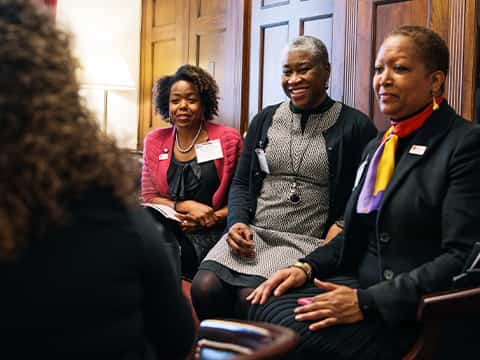
Get Involved as an Advocate
Being an advocate for breast cancer awareness and research funding is one of the best ways you can make a difference.
Only through government action can we make the broad, systemic and lasting change we need to help us achieve our goal of reducing the current number of breast cancer deaths in the U.S. By mobilizing our communities to take action, we can ensure the voice and needs of those with breast cancer and their loved ones are heard by policymakers and government regulators.
Learn more about becoming an advocateLocal Events
Join the fight to end breast cancer by attending an event in Louisiana!
Questions? Contact Us

ShareForCures
Your breast cancer information is as unique as you are. When combined with thousands of other ShareForCures members, you provide scientists with a more diverse set of data to make new discoveries, faster.
Latest News & Information

Nikki’s Story: I’m Not Going to Let Cancer Steal My Sparkle
Nikki Anderson’s cancer journey began with a uterine cancer diagnosis in her 30s, which was followed by a breast cancer diagnosis six years later. She celebrates her journey by fundraising for the Komen 3-Day with Team Sparkle, inspired by her own adage: “I’m not going to let cancer steal my sparkle.”
The post Nikki’s Story: I’m Not Going to Let Cancer Steal My Sparkle appeared first on Susan G. Komen®.
Statement on Passage of Critical Breast Health Legislation in Mississippi
JACKSON – Susan G. Komen®, the world’s leading breast cancer organization, today issued the following statement on the passage of two critical breast health bills in Mississippi. The first removes patient cost for diagnostic and supplemental imaging, a critical form of breast cancer screening for some high-risk individuals and an important step in determining the […]
The post Statement on Passage of Critical Breast Health Legislation in Mississippi appeared first on Susan G. Komen®.
Louisiana
Contact Us
Susan G. Komen Louisiana

Executive Director, Gulf Coast : Brandice Pierre
Email: bpierre@komen.org
Phone: 713-797-2398